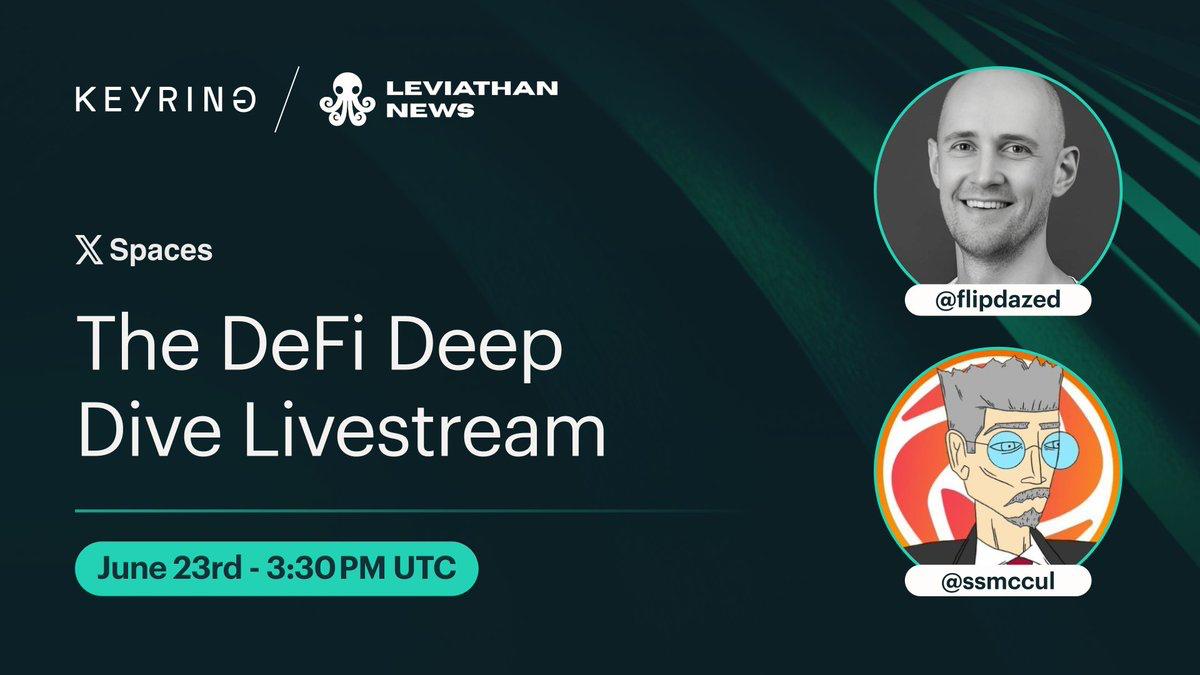
DeFi Lending 2.0 is live. Alex McFarlane of Keyring Network joins the show to unpack how on-chain credit is evolving from yield-farming experiments into institutional-grade, compliance-ready markets. Tune in here

Replay
Click to load the YouTube player. YouTube will set its own cookies once loaded.

Youtube •
Revision history

10 recorded changes

Want your article here?

Promote with Leviathan News

The story centers on a discussion about DeFi Lending 2.0 and how on-chain credit is moving beyond the first generation of overcollateralized crypto loans into more institutional and compliance-oriented lending models. Earlier DeFi lending largely followed the Maker-style pattern of requiring borrowers to post more collateral than they borrowed, but newer protocols have been experimenting with off-chain data, undercollateralized credit, and regulated access structures. Keyring Network fits into that shift because the company describes itself as an institutional-grade compliance gateway for blockchain-based finance and has recently launched zkVerified permissioned vaults on Ethereum, designed to provide privacy-preserving, compliant access to DeFi lending markets. That context helps explain why Alex McFarlane of Keyring would appear on a show about the next phase of DeFi lending: the sector is increasingly focused on how to make credit usable for real-world institutions without abandoning blockchain transparency and settlement. The broader importance is that DeFi lending is no longer only about yield farming and liquidity mining. Protocols such as Maple, Teller, and Alkemi have been cited as examples of efforts to add credit assessment, trusted-counterparty structures, and compliance features, which could expand DeFi credit beyond crypto-native users and into more conventional financial workflows.

AI-generated background, compiled from web sources — not editorial content.

More coverage

Comments